00:00:00:01 - 00:00:08:17
Martin
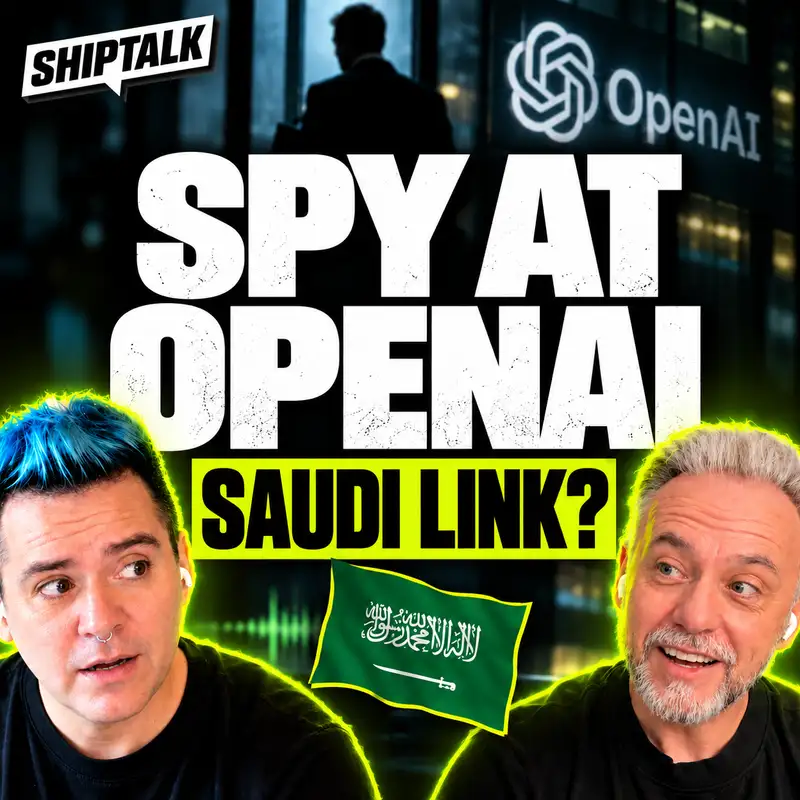
And this blows my mind. I have to tell you. An open AI engineer was arrested on October 9th after security found a hidden recording device.
00:00:08:18 - 00:00:19:21
Adam
I already have this recording. And who is he sending it to? And was it important that he had flights booked back to Saudi Arabia? Microsoft and released over 1400 security patches, which is the most they've ever done.
00:00:19:22 - 00:00:23:15
Martin
This is where the rise of software factories will help. And I will tell you why.
00:00:23:16 - 00:00:26:07
Adam
Japan recently declared a cyber security emergency.
00:00:26:08 - 00:00:31:01
Martin
That is an offensive attacking cipher operation. They are already at war.
00:00:31:02 - 00:00:40:19
Adam
The FBI data breach is a counterintelligence disaster. This is one of the few hacks that has real world long term implications.
00:00:40:21 - 00:00:47:19
Martin
This is ship. Talk to you by harness, where we break down how software delivery is actually changing in the AI era. I'm Martin Reynolds.
00:00:47:19 - 00:00:49:06
Adam
And I'm Adam Arellano
00:00:49:06 - 00:01:15:21
Martin
So let's get right into this first story. And this blows my mind. I have to tell you, an open AI engineer was arrested on October 9th after security found a hidden recording device, thumb sized, encrypted, wrapped in toilet paper, inside the executive conference room at OpenAI's San Francisco office. OpenAI identified the suspect using its own AI models and the employees.
00:01:15:22 - 00:01:27:18
Martin
The employees are Saudi National. And the same week, OpenAI also fired three researchers for mishandling sensitive information. What's your initial thoughts, Adam?
00:01:27:20 - 00:01:38:18
Adam
I thought I thought that that was the point of OpenAI was to mishandle information and to listen to other people. So I guess it's cool when they do it, but other people do it not so much.
00:01:38:19 - 00:02:11:20
Martin
Before planting it. He had used an internal productivity tool to look up building addresses, conference room locations, executive schedules, and external partner meeting times. Surveillance on October 5th showed him reentering the room and checking behind the TV. The same day, security found a second device in an unattended bag left in a different room. OpenAI says no model, wait, source code or customer data were accessed.
00:02:11:21 - 00:02:28:23
Martin
And the one more thing I know the charge got escalated because the DOJ deemed it and the US government deemed it and national security risk. So it went from like wiretap to like it elevates the whole charge up.
00:02:29:01 - 00:02:36:05
Adam
Yeah. But to be clear, they found the device first that was in the comment room. Or they found a device in his bag.
00:02:36:05 - 00:02:41:17
Martin
First they found the device on the same day. I think they found the device in an unintended back.
00:02:41:18 - 00:03:01:19
Adam
Okay. And then went back retrace the steps. And that's how I know that. Oh, okay. That's kind of cool that I don't know about. Cool is the right word, but both the person doing the bugging and OpenAI and the authorities, all of them were using ChatGPT to find each other and or to like, make a plan and do it or find like find out who actually did it.
00:03:01:21 - 00:03:23:17
Adam
It's kind of like having a, a weird chaotic AI that like, is helping somebody do something wrong and then pushing the good guys to like, catch them and stuff like that. I think that's a fascinating use case for all three parties involved. So I have this argument a lot with other CISOs, and it's a fight that I love to pick, which is insider threat is fine.
00:03:23:17 - 00:03:41:22
Adam
Like you can look for insider threat. You should, especially if you've got a very valuable company with a lot of assets that people want to steal. Like, what's the difference between insider threat and somebody that just makes mistakes? Usually it's not very much. In this particular case, there was a bug planted. And so that's like a very different thing than the other insider threats that they were dealing with.
00:03:42:00 - 00:03:58:21
Adam
But at the same time, like how often have they been doing security, physical audits and looking for rogue devices? That's something that happens regularly in other companies and regularly in companies with with high level.
00:03:58:23 - 00:04:22:02
Adam
Intellectual property. So, for example, walked into General Motors headquarters, GM's headquarters in Detroit, and like they put tape over all of our cameras, tape over anything on the laptops, also had a power on down. And then we were under complete surveillance the entire time we there, but not because we were guests. That actually happens with all the employees as well.
00:04:22:02 - 00:04:25:21
Adam
And so our physical security program probably just wasn't up to snuff.
00:04:25:22 - 00:04:35:06
Martin
I've experienced that same thing of being places where it's like, hey, you just you don't take your phone in. It's like you hand over your phone and then you go through the scanner, and that's where your phone stays until you leave.
00:04:35:12 - 00:04:36:08
Adam
Yeah.
00:04:36:10 - 00:05:01:16
Martin
I one fact I didn't mention, which I personally found interesting was that on on his wife's home open AI account, she'd or he probably on her account had done searches for how to build the device. So they actually found that how to build a device as an open AI query that they'd done that had been done on his wife's OpenAI account.
00:05:01:17 - 00:05:20:06
Martin
So that was like part of that whole investigation. So it's not just beyond what happens inside the office, it's what happened outside. So, you know, I think that kind of broad, like how how much, how much of it was planned and involved, you know, and how long had he been planning it? Since the like the minute he was employed.
00:05:20:06 - 00:05:25:04
Martin
Was that always the goal or is it something he was coerced into later?
00:05:25:05 - 00:05:45:09
Adam
One of the questions I have is why? Why would he? Why would he have this recording and who was he sending it to? Was it important that he was a Saudi citizen, and was it important that he went, you know, that he had flights booked back to Saudi Arabia? Does that indicate something? Or. I mean, Saudi Arabia is kind of the hub of the Middle East where you can land there and go anywhere in the world.
00:05:45:09 - 00:05:51:03
Adam
So, you know, was this something that was state sponsored? Is this something that he was trying to garner favor? Like who knows?
00:05:51:08 - 00:06:19:15
Martin
Yeah. And I mean, you have the time to that OpenAI has like some major infrastructure deals with the Saudi humane is the name of the organization. I know at the moment the FBI have ruled out any kind of state actor. But, you know, I think you're right, that geopolitical risk assessment of of the business as a whole, right, especially given that the US is so protective of that leadership that they have in AI.
00:06:19:17 - 00:06:21:17
Adam
Yeah. Are they trying to be protective of it?
00:06:21:18 - 00:06:34:23
Martin
That's kind of the story so far. This is one I think we're just going to continue to watch as it goes forward, because I'm sure 100% sure there will be more revelations behind this. It's never as simple as the first thing comes out.
00:06:35:00 - 00:06:58:14
Adam
Yeah. Next. The next thing that I wanted to bring up another another article that we caught this week, which Microsoft decided to one up itself and released over 1400 security patches on on Patch Tuesday, which is the most they've ever done, but it's doubled. And what they used to do, maybe even more than that, but included those 1400 security patches are reported software vulnerabilities.
00:06:58:14 - 00:07:32:14
Adam
It included three zero days, which is not unprecedented. They've released those before, but one of them is already being exploited by attackers. So the 1407 CVS, this massive number of patches that Microsoft has released is significant because it's one thing for Microsoft to release these patches. It's a whole other thing that if you own these devices, getting 1400 patches out into your environment in any period of time is significant and difficult and, you know, takes Herculean effort, I think.
00:07:32:14 - 00:07:58:22
Martin
So I was intrigued. I mean, obviously I didn't go through all 1400 items to see to see what they were. I did see the the relatively no low number of, you know, zero days. I did wonder how much of this is, hey, you know what? We're going to set up some agents that essentially sit there and churn through stuff we know about, stuff we've that we haven't addressed.
00:07:58:22 - 00:08:18:06
Martin
And so, like, I'm wondering how much of it is, you know, automated resolution because they, they now have a way to do that. And whether actually this is you know, I feel like it could be the new norm. It could be I wish they wouldn't do it on a Tuesday. And they just released them as they fixed them.
00:08:18:06 - 00:08:41:22
Martin
That's that's a whole other thing. But you know, I feel like continuously releasing those would be better because, you know, when you suddenly got I mean, how do you assess, how do you assess as a person, even if you're using AI to help you say, hey, okay, here's all these fixes that have just come out and here's my estate, which is, you know, thousands of machines with different things on it.
00:08:41:23 - 00:08:58:15
Martin
How do I make sure that I'm deploying the right things to the right place? And I've assess the risk of all those different things in that estate. And I'm doing the right ones first and fastest. And the other ones can wait. Because just because Microsoft has patched Tuesday, now I have to have Patch Thursday. And yeah, you know like it's.
00:08:58:19 - 00:09:20:11
Adam
But I've got the answer. Like if you're looking for an answer Martin I have the answer. Go on. You have Microsoft devices in your network. Turn them off sooner than later. Just get it over with. Just get rid of it. Like this is this is Microsoft's business model. I mean, at the end of the day, like releasing 1400 patches, not everybody's going to be affected by all 1400 of them.
00:09:20:11 - 00:09:48:18
Martin
I don't think it's an evolution that needs to happen at Microsoft anymore. I think it needs to be revolution. It's it's yeah, it's that entrenched in needs to be something radical. And that might be a little bit painful for them, but I think it would like make a huge difference to how they're perceived, consumed. You know, that kind of somewhat negative perception that might creep into a lot of professionals in the industry.
00:09:48:23 - 00:10:11:19
Adam
So when looking at this entire situation, what we're seeing is, in my opinion, what this looks like is that Microsoft is actually using artificial intelligence in their review process and finding vulnerabilities that are now in production. So keep in mind, if it hits Patch Tuesday, it is in production. So whatever they shipped they then found out was bad and now they have to patch it.
00:10:11:19 - 00:10:38:23
Adam
So I think this is a signal from Microsoft that yes, they're using artificial intelligence to review what's already in the wild, but I think it also shows that they're not using it sufficiently before production, before commit to actually get at the problems before they're released, which I think is the fundamental problem. They're continuing down the same path that they have, which is shipping whatever somebody commits without doing sufficient testing, and that's what they should call us about.
00:10:39:00 - 00:10:45:17
Adam
We might be able to help them, but like, seriously, they're not using AI across the board right now. They're using it at the end of the assembly line.
00:10:45:18 - 00:11:05:03
Martin
Which is really the most expensive way to do it. It's easier to fix it on, you know, early in the process than like, this is like proven again and again and again. Yeah, I, I, I have one final point on this because I genuinely believe this is where the rise of software factories will help. And I will tell you why.
00:11:05:05 - 00:11:31:16
Martin
Because the idea of the software factory is you have more context at the coding time beyond just the coding rules. And I think, you know, if you've got the your, your code engagement that is aware of your infrastructure and it's aware of your, your security requirements and it's aware of the scanning that's going to happen and it knows how to do secure by design because you've also given it that contacts, you know, secure by design, secure by default.
00:11:31:16 - 00:11:53:08
Martin
But you've got that feedback loop working. I don't think we're there yet, but I think like that is part of the promise of that, right? That it will improve. You know, we won't AI won't be generating more bugs than a person was, or more security vulnerabilities in a person was, because it will get better, because it's learning from the ecosystem that it's working in.
00:11:53:13 - 00:12:15:08
Adam
All right. So the next story that we want to talk about is about Japan. So Japan recently declared a cybersecurity emergency following a massive surge in cyber attacks. The concern is that AI is making hacking cheaper and easier to scale. Instead of targeting one major company, hackers can now potentially attack hundreds of smaller businesses at once, and Japan has taken an aggressive approach.
00:12:15:10 - 00:12:42:23
Adam
So under this new law, authorities will be able to intervene in hackers infrastructure and potentially stop attacks before they happen. But it's subject to strict oversight. So they were scheduled to take effect in November of 26, but that date may even be moved up. So I have thoughts on this, especially about Japan and their cybersecurity apparatus. This is but from from the get go, knowing that Japan declared a state of emergency, there's new powers going coming into effect in November 2026.
00:12:42:23 - 00:12:50:04
Adam
And any reactions to this that Japan is not just saying this is a problem, but declaring a state of emergency.
00:12:50:06 - 00:13:16:02
Martin
I mean, I think that caught my eye on this story. Was that that the gap between the incident reporting stuff going live and the detection infrastructure being up and running, right. So I think it's about 13 months between like reporting the reporting duty we started October 1st and the detection infrastructure going live, which is November 2027. That seems like an insane gap.
00:13:16:03 - 00:13:19:18
Martin
And do you think that just creates more exposure?
00:13:19:20 - 00:13:51:18
Adam
Okay. So what part of what Japan is saying is they're saying out loud, we reserve the right to hack the hackers first. I think that's that's cute. Like it's real cute. As a reminder, the cyber security minister of defense in Japan that was in charge of the 2020 Olympics cybersecurity defense, admitted that he never owned a computer and still doesn't because, yeah, this is the problem with with highly stratified societies who are very rigid in their approach to things.
00:13:51:18 - 00:14:21:10
Adam
So that guy was the top computer official in Japan at the time for cybersecurity defense did never, never in his life, never did he ever touch a computer. And but he was senior and he had been around for a long time. So obviously he's the one that deserves to be in charge, right? Not the case. Like AI or no AI, the the calcification, the amount of bureaucracy, the way that cybersecurity defenders in Japan are so set in their ways is going to continue to hurt them a lot.
00:14:21:15 - 00:14:47:06
Martin
And what do you think about like they were linking like more than 200 incidents that have happened so far to I love the name of this because it's China's mirror face against Japanese agencies, because I instantly go to hugging face when I hear that. But you know, they're all to one single, one single model.
00:14:47:07 - 00:15:08:07
Adam
Yeah, one single bad actor group. Yeah, that I think that's part of the story is that one single actor group that is probably nation state backed, was capable of bringing so many Japanese corporations to their knees that the government actually had to act like that's kind of scary, but predictable. This is exactly what we said was going to happen two years ago.
00:15:08:07 - 00:15:39:23
Martin
So one of the things that they're going to be able to do under this new act and do this under peacetime is the deleting of malware from foreign service, which is essentially that is an offensive attacking cyber operation. I know they're also been hacked, but like it makes it feel like there's they are already at war on the cyber front because they'll do that whether that server is in a friendly allied nation or an allied, you know, you know, whether that's coming from China or it's coming from France or it's coming from the US.
00:15:40:03 - 00:15:45:23
Martin
They they're not distinguishing. It's like wherever that that attacks coming from, they will attack back.
00:15:46:01 - 00:15:52:00
Adam
To be clear, they have permission to do so. That doesn't mean they have the capability. Two very different things.
00:15:52:02 - 00:15:55:13
Martin
Okay, I.
00:15:55:15 - 00:16:28:03
Adam
It's an important distinction. I mean, it is it really is an important distinction if you like. This is this is a, you know, small, you know, nation somewhere saying we reserve the right to attack United States of America. Like okay, sure. Let's go. Like try it. We'll see what happens. But I don't know, I think what what I, what I really think we should take away from all this is the, the swarm or the, the ability for massive cyber attacks to be carried out with mythos level models.
00:16:28:03 - 00:16:49:06
Adam
We were worried about this for months. It's here like it's we're in the middle of it right now. And this is evidence that there's been one attack group that drove an entire nation to declare a state of emergency based off of their actions, and I think that's one of the things that we really need to hone in on is this is the evidence of what anthropic said mythos meant to the rest of the world.
00:16:49:06 - 00:17:02:09
Adam
So there's a lot I think came out of my mouth a couple of times. A lot of people that were like, yeah, Mythos and Project Glass Wing were advertising. Yeah. But they're also a really good prediction of what was going to happen. And this is happening faster than we actually originally thought it would.
00:17:02:10 - 00:17:04:18
Martin
And do we think we can keep up?
00:17:04:20 - 00:17:17:08
Adam
No, we've never been able to keep up. It's never been the case when we're ever. When were the good guys ever in front of the bad guys? Hashtag never. When it comes to cybersecurity, we're always behind them because we have laws and principles in place that they don't.
00:17:17:08 - 00:17:21:13
Martin
Okay, interesting. Very interesting.
00:17:21:14 - 00:17:45:05
Adam
So in September this year, the FBI started investigating Shiny Hunters because they claimed they had stolen data on thousands of employees and applicants. More than 5000 records are actually. Excuse me. They said that they that they had millions of records and they sent as evidence 5000 records of different people involved at the FBI at different levels. And the FBI warns that the group often exaggerates.
00:17:45:05 - 00:18:03:15
Adam
But to date, we haven't ever seen shiny hunters exaggerate to the to the tune of this, especially not a begins the FBI. So the reason I bring this article up is twofold. One, this is one of the few hacks that has real world long term implications. Usually, a hack is very limited in scope when it comes to time.
00:18:03:15 - 00:18:30:09
Adam
This one is not. This is the records of everybody that has applied to be and agent everyone who has accepted. And it includes enough general information that a bad actor or us or somebody would be able to take those records and retroactively trace back that person's life, look for compromising information, look for compromising relationships going forward, knowing where they are, who they are, what their families like.
00:18:30:09 - 00:18:54:21
Adam
Find ways to actually get at these people and extort them and make them turn. Which is always been the case with the FBI, always been the case with intelligence services. So the fact that this is a hack of records, which normally isn't that big of a deal, but that it has real world consequences and actually weakens the US intelligence apparatus, I think that's why this is significant once we see the scope of all of it.
00:18:54:22 - 00:19:20:17
Martin
Yeah. And like I was I know they only released the 5000 sample. I say only the five 5000 is quite a big sample, you know, as, as a data breach in its own right. And the fact that it had, you know, names, addresses, Social Security numbers, family members. I think it's scary because, like you say, that that pushes it out beyond the boundaries, you know, because they can really start to leverage that.
00:19:20:18 - 00:19:48:00
Martin
I had another thing on this. So it's part of this. The FBI like removed a Accenture as a contractor, for instance, like failing to install a required patch. And my question really is what does that say about like third party government, like third party risk management, when the FBI's own systems depend on vendors patching, like, is this something they should actually be taking in-house?
00:19:48:02 - 00:20:13:02
Adam
Well, if they had the talent to do it, if they had the ability to track the talent, which they don't. And let's let's not forget that there's an entire government agency called Cisa that was gutted during the Doge days, and that just completely obliterated sharing between these different, these different groups. So I think this is kind of the the, the crows home, the crows coming home to roost.
00:20:13:04 - 00:20:47:14
Adam
That just is going to be a gift that keeps on giving. But at the end of the day, this third party vendor blame isn't going to do anybody any good, like just because they didn't patch a certain thing. Like ultimately you're a contractor who's responsible for the contractor, the government civilian that should be managing that contract. But since 2011 or excuse me, since September 11th, 2001, the government has been just hand over fist throwing money at contractors, which is atrophied, the actual skill set of those internally.
00:20:47:16 - 00:21:05:03
Adam
Not from my comments on Japan, like the FBI doesn't have the internal wherewithal to do this by themselves, and they don't have the structure to pay people who are good at it to actually do this for themselves internally. So they have to contract out like the FBI would not be able to hire me right now because I'd be like, that's not enough money.
00:21:05:03 - 00:21:30:23
Martin
I still find it just a little bit, almost breathtaking. It's it it feels to me like a problem of its own making. And and it's not been one big, big bang decision that that's got them to this point. It's like you say, it's a drip, drip, drip, drip, drip that's actually now left them in this potentially exposed situation, lacking the skills to be able to do it fully internally.
00:21:31:01 - 00:21:40:02
Martin
So we talked about a lot today. There's this general action of yes, there are problems. But we we're seeing that like proactive move going forwards.
00:21:40:04 - 00:21:54:20
Adam
Yeah I agree it's it is a lot of doom and gloom. But there's also more than just a silver lining. I think there's a silver thread throughout that there's an opportunity for us to succeed and opportunity for things to get better. I'd agree with that. I think I'm.
00:21:54:22 - 00:22:01:10
Martin
I, I am horrified that we agree, however.
00:22:01:12 - 00:22:12:12
Martin
That's been shipped off. Brought to you by harness. If anything Adam said today really annoyed you. Then subscribe and tell us why. Until next time, stop talking. Start shipping.